2026-11-23 ·
Protecting Kitchen Cabinets From Salt Air Corrosion in Malibu Homes
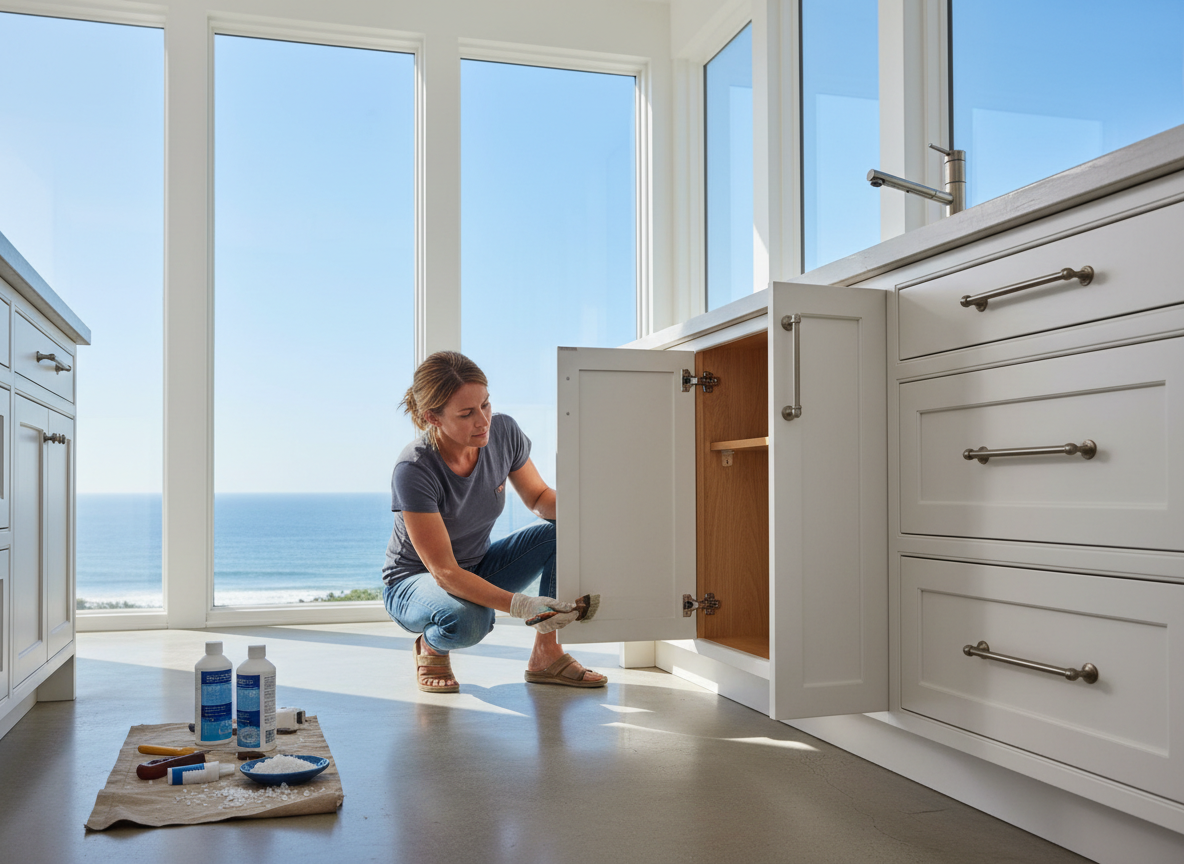
Salt air in Malibu shortens unprotected cabinet lifespan to 8–12 years in exposed homes along Carbon Beach and Point Dume. Proper sealing and material selection can push that range to 15–20 years even in homes within 500 feet of the surf line.
Salt Air Effects on Cabinets in Coastal Los Angeles County
Malibu’s mild Mediterranean climate brings consistent onshore winds that carry salt particles inland to neighborhoods such as Malibu Colony and Paradise Cove. These particles settle on cabinet surfaces, draw moisture from the air, and create micro-corrosion that lifts finishes within three to five years on standard particleboard boxes. Homes near Zuma Beach and Point Dume State Beach see faster damage because prevailing winds funnel directly through canyons. Older stock built before 1990 often lacks modern vapor barriers, allowing salt to reach hinge pockets and drawer slides first. Daily temperature swings of 15–20 degrees between morning fog and afternoon sun speed the cycle of condensation and drying that cracks protective layers.
Material Choices That Resist Ocean Spray
Solid maple or cherry with marine-grade plywood cores hold up better than standard MDF in high-salt zones. Factory-applied catalyzed conversion varnish rated for 1,000-hour salt-spray testing provides the baseline protection most Malibu kitchens need. Stainless-steel hinges and drawer guides eliminate the first failure points that appear after seven to nine years. Avoid raw oak or birch near windows that face the Pacific; their open grain traps salt crystals that expand with humidity. For homes in Carbon Beach, pairing these cabinets with the humidity-resistant countertop guidance in Selecting Countertops That Handle Malibu Humidity and Ocean Spray creates a complete moisture barrier system.
Sealing and Coating Steps for Existing Cabinets
Begin by removing doors and drawers, then clean all surfaces with a 50/50 vinegar-water solution to neutralize existing salt residue. Apply two coats of clear marine polyurethane to interior box surfaces and three coats to exterior faces, sanding lightly between coats. Pay special attention to the bottom edges of wall cabinets where salt-laden air pools. Reinstall hardware with dielectric grease on screw threads to prevent galvanic corrosion. In Point Dume homes, repeat the exterior coating every 24–36 months because wind-driven spray reaches higher elevations on those slopes.
Maintenance Routines That Extend Service Life
Wipe cabinet fronts weekly with a damp microfiber cloth followed by a dry pass to remove salt film before it bonds. Every six months, inspect hinge pockets and drawer slides for white powdery residue; clean immediately and reapply a thin film of corrosion-inhibiting oil. Keep interior humidity between 45–55 percent with a dehumidifier during the winter months when marine layer moisture lingers. Homeowners in Zuma Beach report cabinets lasting an additional four to six years when this schedule is followed consistently compared with neighbors who skip seasonal checks.
Planning a Cabinet Upgrade in Malibu Neighborhoods
When corrosion has reached the substrate, a targeted Kitchen Cabinet Remodel restores function without full demolition. Focus first on boxes nearest exterior walls in Carbon Beach and Paradise Cove homes where exposure is highest. Integrate the new layout considerations outlined in Kitchen Layout Adjustments for Homes on Malibu Canyon Roads to improve airflow behind cabinets and reduce future condensation. This approach keeps the project scope narrow while addressing the specific corrosion patterns common throughout Los Angeles County coastal zones.