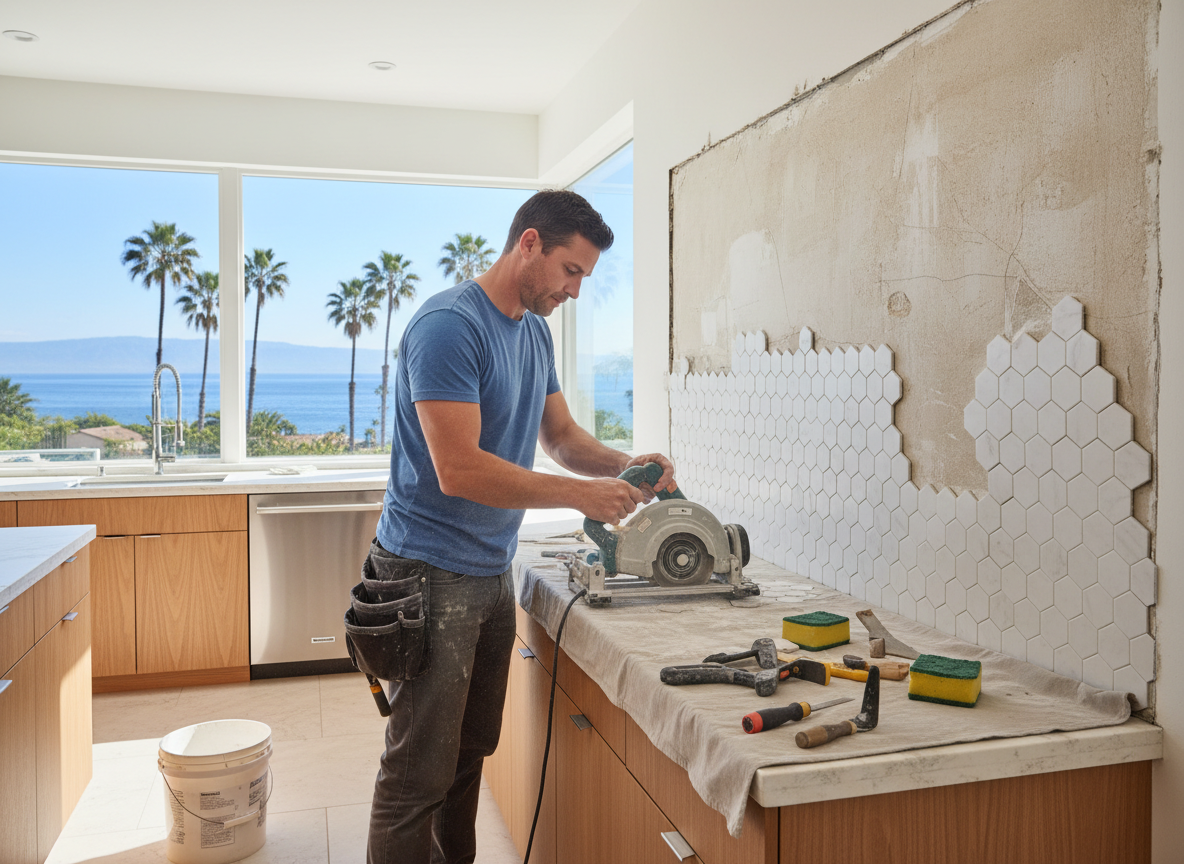
Malibu kitchens in neighborhoods like Malibu Colony and Carbon Beach often feature older tile or plaster backsplashes exposed to salt air and humidity from the Pacific. These conditions accelerate grout deterioration and cause substrate movement that standard inland installs overlook. We assess wall framing for rot common in Los Angeles County coastal properties before selecting moisture-resistant cement board and marine-grade adhesives that hold up under the mild Mediterranean climate with its occasional heavy winter rains.
Point Dume and Zuma Beach residences frequently have irregular wall planes from original 1960s and 1970s builds, requiring custom cuts and leveling that change the entire layout. Pepperdine University area homes add another layer with tighter lot constraints limiting material staging. Our process includes checking for proper ventilation behind the backsplash to prevent mold growth driven by ocean fog rolling through Paradise Cove.
Nearby Santa Monica and Calabasas clients sometimes bring us in for matching work when they split time between properties, but the core challenges remain the same: salt air corrosion on metal trim and the need for expansion joints where tile meets countertops in homes built on sloped terrain near Malibu Creek State Park.
We source tile and grout rated for coastal exposure and test adhesion on site rather than assuming standard methods work. This prevents callbacks when summer humidity spikes or winter storms drive moisture through older stucco exteriors common throughout the region.
Technician insight
In Malibu, the thing that catches most people out with Kitchen Backsplash Remodel is older plaster walls in Carbon Beach homes that have absorbed years of salt air; they crumble during demo and force extra framing work before any tile can go up.
Backsplash Failure Near Zuma Beach
Homeowners in a Point Dume property noticed loose tile and mold behind the stove after winter rains. We found compromised drywall from ocean humidity seeping through an unsealed edge. We replaced the substrate with cement board, installed new tile rated for coastal conditions, and sealed all joints.
How it works
- 1
Site Assessment
Measure walls, inspect for moisture damage from coastal air, and note substrate conditions in homes from Point Dume to Malibu Colony.
- 2
Material Selection
Recommend tile, grout, and adhesives suited to salt air and humidity while matching existing kitchen finishes.
- 3
Surface Preparation
Remove old material, repair framing if needed, and install moisture barriers before any new work begins.
- 4
Installation And Finishing
Set tile with proper spacing, apply grout, seal surfaces, and verify expansion joints for long-term performance.
Pricing
Pricing varies by tile type, wall condition, and home access; we provide upfront quotes after the site visit.